
Relentless curiosity was among the things we loved about Dick Marsh, who was taken from his family, friends, and beloved library in 2024. Dick’s collection held some superlative material of extravagant value, but he was no mere trophy hunter; his collection was just as likely to hold items worth only modest sums. All something needed to merit a place on Dick’s shelves was to be interesting, to have a story to tell, and, better, a story that Dick could research and savor. Dick was not the kind of guy to arrogantly leave his bookplate in his books. Instead, he’d leave his handwritten research notes, full of his citations, speculations, and questions.
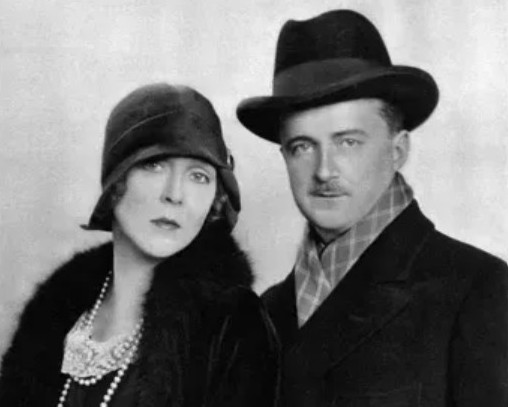
Among his many collecting loves were Duff and Diana Cooper, each remarkable in their own right and, together, a “power couple” partnership influential in British politics and culture for three and a half decades.
DUFF COOPER
Sir Alfred Duff Cooper, 1st Viscount Norwich (1890-1954) was educated at Eton and Oxford, served with distinction during the First World War, and was elected to Parliament as a Conservative in 1924. He served as: Secretary for War (1935-37); First Lord of the Admiralty (1937-38); Minister of Information (1940-41); and Ambassador to France (1944-47). Cooper was married to Lady Diana Manners, a great beauty, successful actress, and scintillating hostess who both financially and socially enabled her husband’s political career. We’ll talk more about her soon. But Duff first. Cooper was knighted in 1948 and created Viscount in 1952, during Churchill’s second and final premiership. An author whose work spanned history, fiction, and verse, Cooper filled his “spare” time writing.
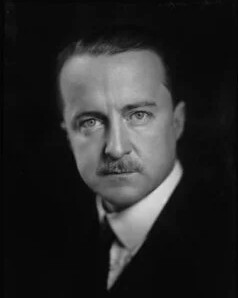
Much of Cooper’s political career was entwined with that of his friend, Winston Churchill. The two were friends for 40 years, having first met in 1914. Cooper’s regard for Churchill was both admiring and prescient. In March 1924, when the then-Liberal Churchill lost his seat in Parliament, Cooper wrote to him: “I know you have the lion’s courage which will enable you to make light of this cruel blow… there are a number of young and eager Conservatives whose enthusiastic support you command… They look forward to the time which cannot be far distant when you will be their inspired and inspiring leader.” Churchill officially rejoined the Conservative Party after a two-decade absence the next year, in 1925.
In 1929, both men suffered a serious political blow. Cooper lost his seat as a Conservative Member of Parliament in the 30 May 1929 General Election, which cost the Conservatives their majority and Churchill his position as Chancellor of the Exchequer, even though he survived his own reelection bid. Both men turned to literary purpose and to history, Churchill working on his biography of the First Duke of Marlborough while Cooper undertook his first book, a biography of the French diplomat Talleyrand, Marlborough’s contemporary.
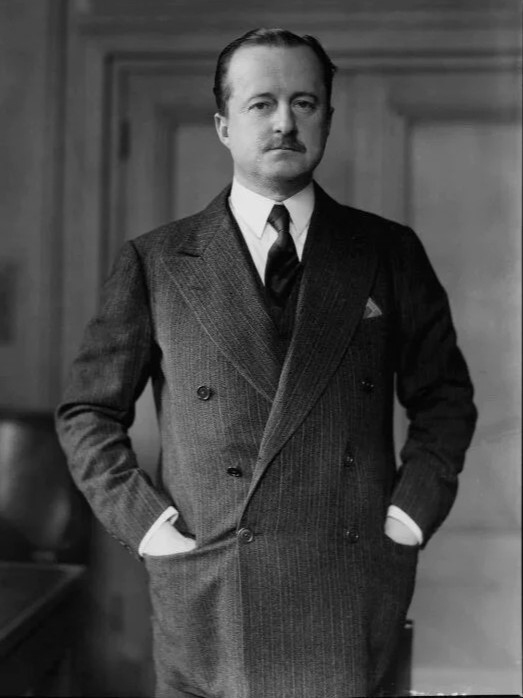
In the 1930s, the two were fellow “Anti-appeasers” of Nazi Germany. Churchill’s “Finest Hour” would have to wait until 10 May 1940, when he finally became prime minister of a beleaguered Britain. Cooper arguably had his own “Finest Hour” in October 1938. He was dining with Churchill at the Other Club when it was announced that the Munich Agreement, Prime Minister Neville Chamberlain’s craven attempt to appease Hitler, had been signed. At the time, Cooper was First Lord of the Admiralty – the position Churchill had held from 1911-1915 and would hold again from late-1939 to mid-1940. The next day, Cooper resigned from the Government in protest. Cooper’s wife, Lady Diana, telephoned Churchill to tell him the news and later recalled in her memoirs how, as she spoke, “his voice was broken with emotion. I could hear him cry.”
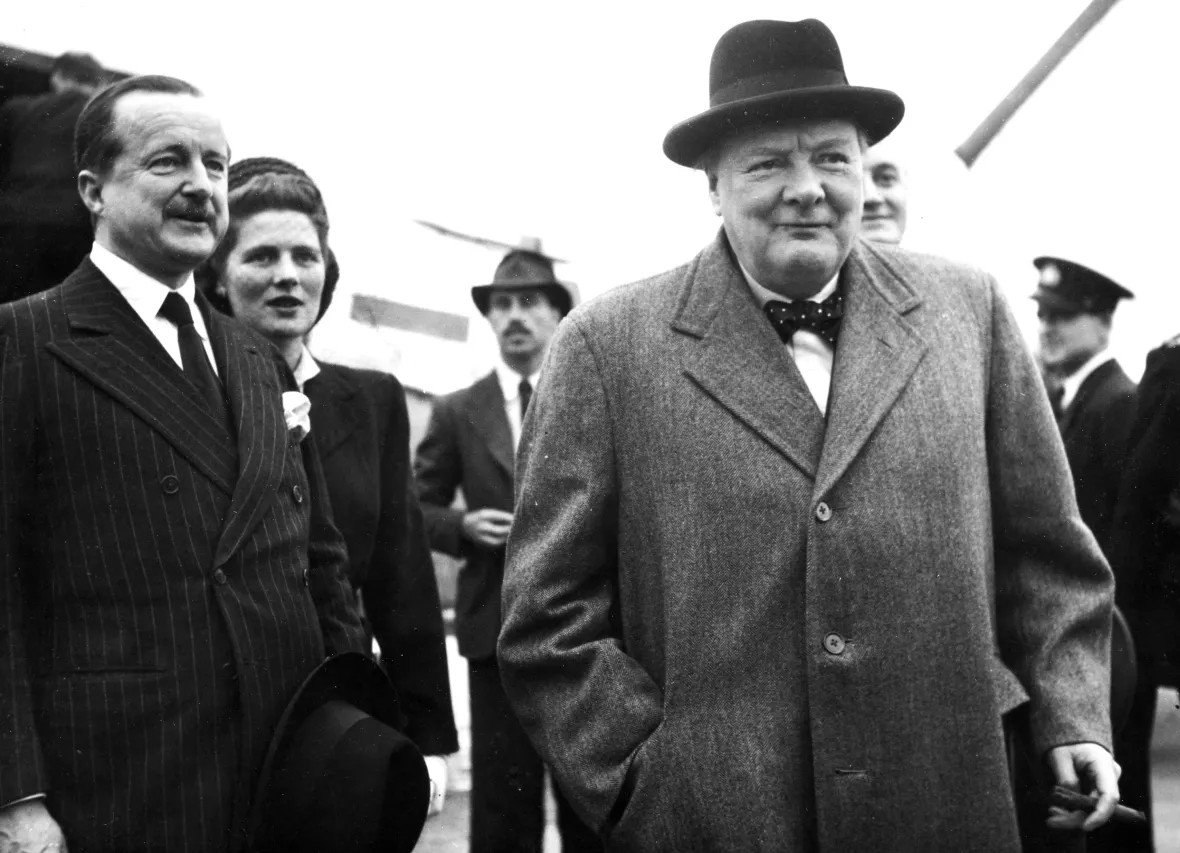
Cooper would serve Churchill’s wartime Government. He would reach his own apogee when Churchill appointed him as Britain’s ambassador to newly liberated France. Cooper served in the role from 1944-1947, his success as Ambassador crowned on 4 March 1947 “by the signature of a treaty of alliance between Britain and France at Dunkirk.”
“Courage and joy in living were the most conspicuous features of his personality; if he had had less of either he might have achieved higher office but his life would have been far less fulfilled. He can fairly be accused of an extravagantly short temper, self-indulgence, and an inordinate appetite for wine, women, and gambling, but he was never mean or in the least ignoble; at times, indeed, he showed true nobility. He was a great-spirited patriot, too proud to court popularity, too reserved to command it readily, but a man whose honesty, generosity, and public spirit were never put in question.”
DIANA COOPER
To say that Diana Olivia Winifred Maude Cooper, Viscountess Norwich, known as Lady Diana Cooper, (1892-1986) was an actress, society hostess, and author is accurate in summation, but woefully inadequate. Likewise, Diana’s great beauty often eclipsed her cleverness and sense of humor. Born to privilege – officially to a marquess but possibly fathered by the brother of a Baron – Diana “received no formal education” but “learned much, including great drifts of poetry.” This shaped her prose, which was vivid, and her spelling, which was idiosyncratic.
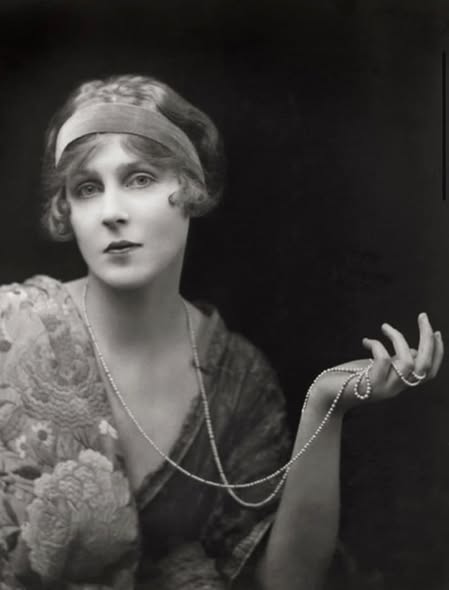
Diana formally ‘came out’ in 1910 and participated in excess in her so-called “Golden Generation”, which lost much verve and many lives to the First World War. While Diana served as a nurse at Guy’s Hospital, several of her many suitors died in the fighting. Alfred “Duff” Cooper did not, prevailing both in battlefield heroism and against the opposition of Diana’s ambitious mother. They married in June 1919.
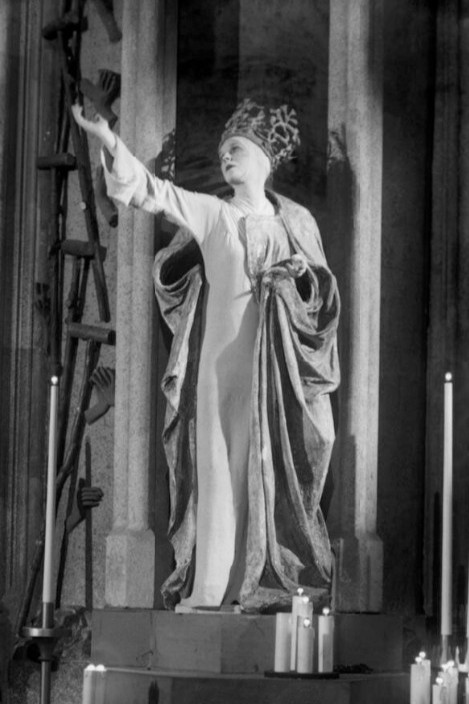
Acting, where Diana “gained the reputation of a hard-working actress as well as a transcendent beauty”, earned the money that enabled her husband to enter politics. Most notable was her role as Madonna in the play The Miracle. “This was first staged in the USA from November 1923 to the following May, and again for the following three autumns and winters. It toured Europe in 1927, and London and the provinces in 1932; the last performance was in January 1933. The Miracle was a phenomenal success, and Diana Cooper’s triumphant part in it was remembered as long as she lived.”
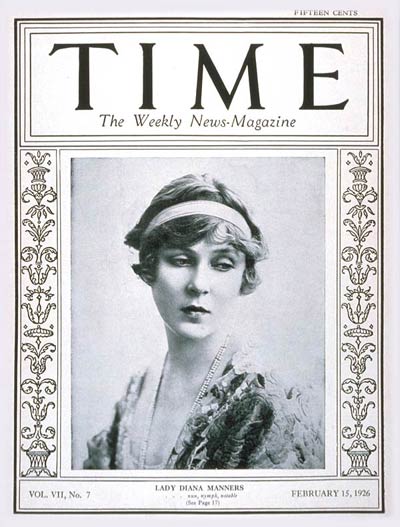
Acting eventually became secondary to her only son’s education and support of her husband’s career. During the 1930s she had “opportunity to display her outstanding talent as a hostess” though she was much more. During the Second World War, she supported her husband’s work in the Government of his friend, Prime Minister Winston Churchill, “even accompanying him to Singapore and the Far East against convention, and in the face of opposition.” Their zenith came when Duff became the first post-war ambassador to France. “With her remarkable ability to get on with people” Diana “collected a group of artists and writers” and “gave the embassy a glamour possessed by none other.”
Duff was created Viscount Norwich in 1952, but “Diana would have none of it, announcing in The Times that she wished to retain her former name and title, so Lady Diana Cooper she remained.” She and Duff had been together for 35 years when he died in 1954. She was “distraught without him” but filled her remaining 32 years with her son, grandchildren, friends, travel, and with the writing of her three-volume autobiography, “which was a resounding success.”
“A marriage which never staled.”
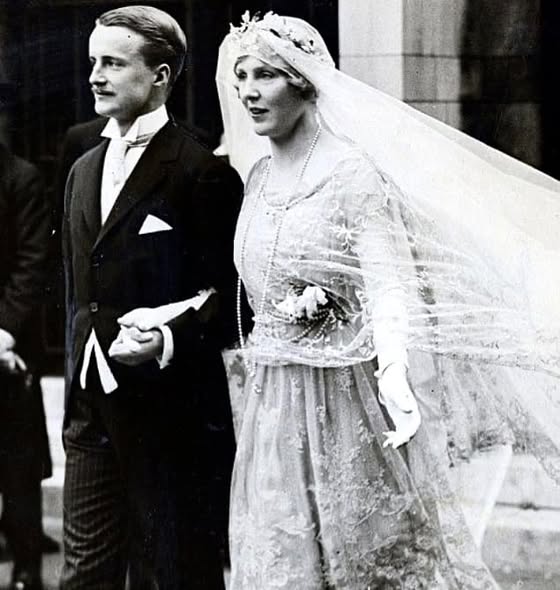
When Duff was courting Diana during the First World War, he told her “Bores with God’s help we will never be.” They weren’t. It was not a conventional marriage. “Diana had many who loved her and Duff was frequently unfaithful.” Nonetheless, every indication is that they truly loved one another and made a tremendously dynamic and effective partnership. “It was a marriage which never staled… for each the relationship with the other remained the most important thing in their lives.”
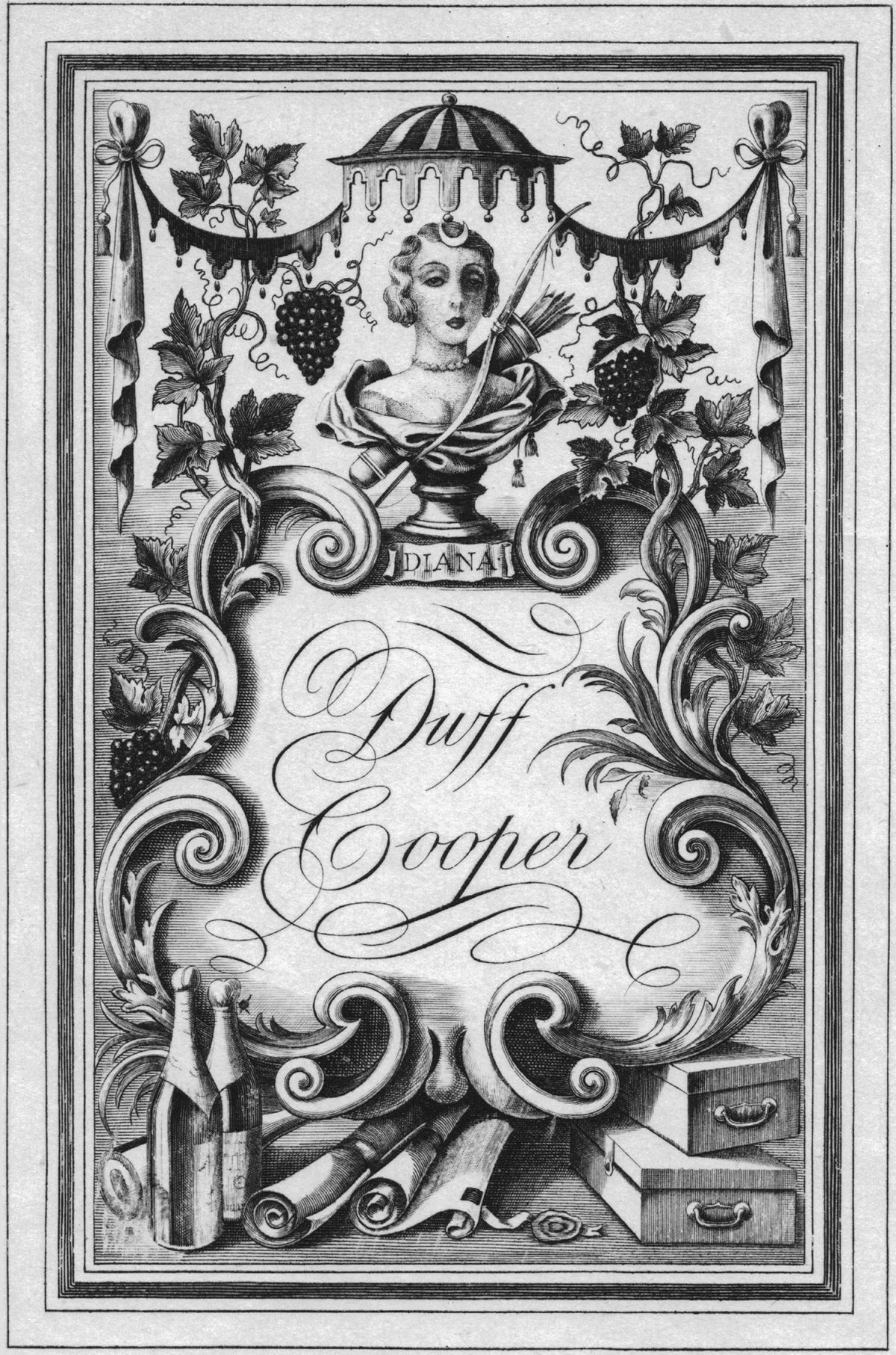
A symbol speaks to both Diana’s place in Duff’s firmament and to their fulfilled commitment to never be bores– the bookplate that adorned the books in their library.
The bookplate was designed by the artist Reginald John “Rex” Whistler (1905 –1944) for the Coopers, his friends and patrons. The bookplate features a crowd of classical and modern elements representative of their shared life – champagne bottles, scrolls, despatch boxes, trailing grape vines. Tellingly prominent at the top center of the bookplate is a bust of Diana Cooper, portrayed as her namesake Roman goddess of the hunt, with a crescent moon diadem on her brow, a bow across her chest, and a quiver of arrows over her shoulder. Whistler wrote to Diana “I hope the bust of you isn’t too libelous – it looks haughty but I think busts SHOULD look rather haughty, don’t you”.
In some ways, Duff and Diana Cooper and the life they lived are a relic of a bygone era, rooted in the strange, evolving social dynamics of the 20th century’s Interwar era. In other ways, their combined dynamism and accommodating, mutually complementary partnership has more modern overtones. There is plenty of room for nuanced, retrospective consideration of the Coopers, but bores, certainly, they were not.
Cheers!
References: ODNB; Cooper, Old Men Forget; Cooper, The Light of Common Day; Ziegler, Diana Cooper; Gilbert, Winston S. Churchill; The Pol Roger Duff Cooper Prize
3 thoughts on “Duff & Diana Cooper: “Bores with God’s help we will never be.””