
On 30 November 2026, Winston Churchill’s birthday, we will release an extraordinary catalogue of thirty-one pieces of correspondence from Winston Churchill. More on the “extraordinary” claim in a moment. In recent weeks we just added the final few pieces, so this seems a good time to share – and maybe tantalize with – what we’ve been working on.
Extraordinary?
We just called the forthcoming catalogue “extraordinary” – a big word that we are using on purpose. Winston wrote a lot of letters during his long life. So there is never a shortage of correspondence by him on the world market. But letters that are truly remarkable (yep, another big claim) – remarkable for content, context, time, place, or some combination thereof – these are scarce. Such letters don’t just offer a few words and a signature; they offer singular perspective and insight on the writer, and a candid window on a specific moment in time.
The thirty-one letters in this catalogue span 24,530 of Churchill’s 32,927 days, more than 67 years of the 90 Churchill lived, from age 19 to age 87, from his as-yet-unproven youth to a time when Churchill passed “into a living national memorial” of the time he had lived and the Nation, Empire, and free world he served.
There are letters written from Churchill’s various homes – from his first bachelor flat to his beloved Chartwell. There are letters written from his many Cabinet offices – including the Colonial Office, Home Office, the Admiralty, the Ministry of Munitions, the War Office, and, of course, 10 Downing Street. But Churchill also writes from India, from New York, from Cairo, from Blenheim Palace, and from the trenches of Flanders. There are letters Churchill explicitly marked “Private”. There are letters that are not so marked, but perhaps should have been.
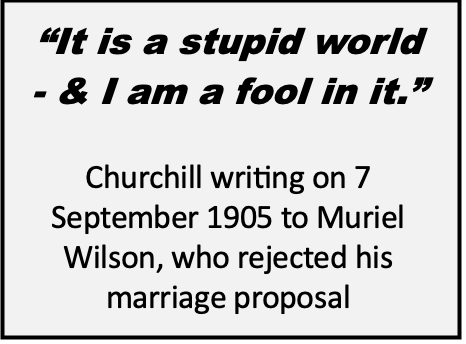
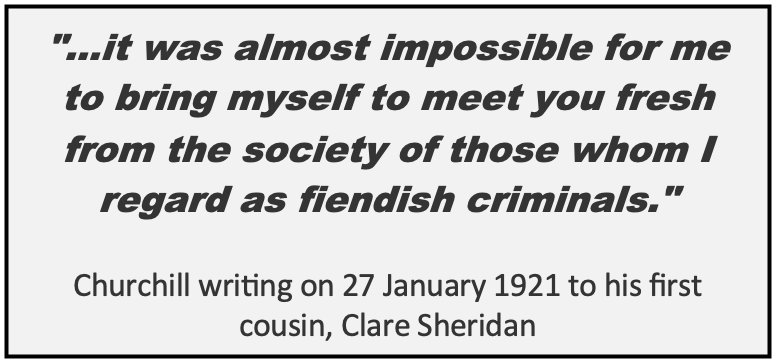
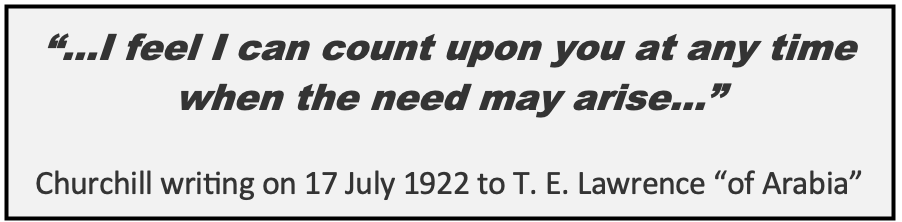
Churchill writes to close friends and allies, to women he’s courted, to prime ministers past and present, to commanding officers, to T. E. Lawrence “of Arabia”, to his King, and to a number of relatives, including his brother and his only female first cousin, “the nearest thing to a sister that Winston ever had”.
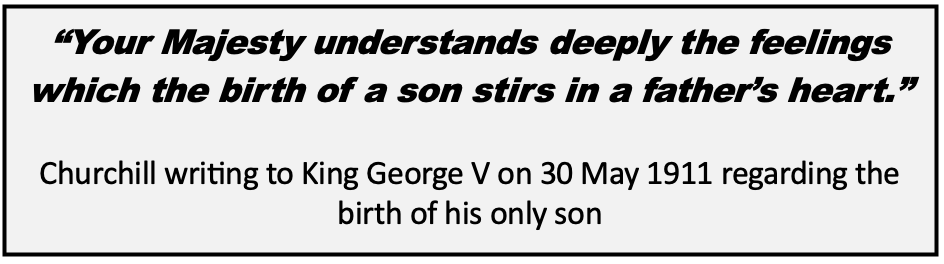
Across the thirty-one letters (and sometimes within them individually), there is an incredible range of tone, intention, and emotion. Churchill writes insightfully and incisively, mournfully and poignantly, desperately and pleadingly, confidently and stridently, playfully and humorously.
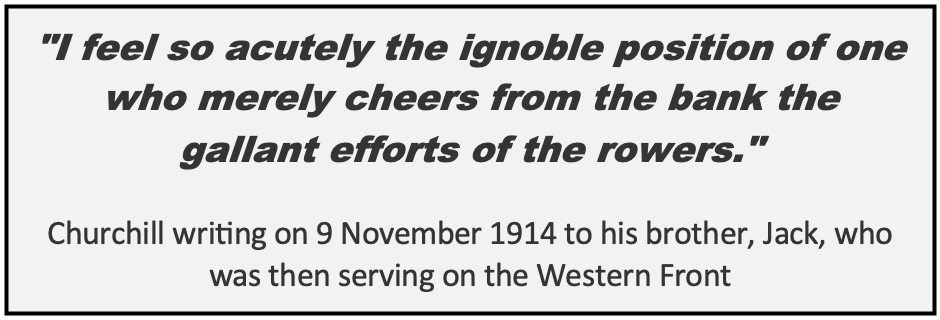
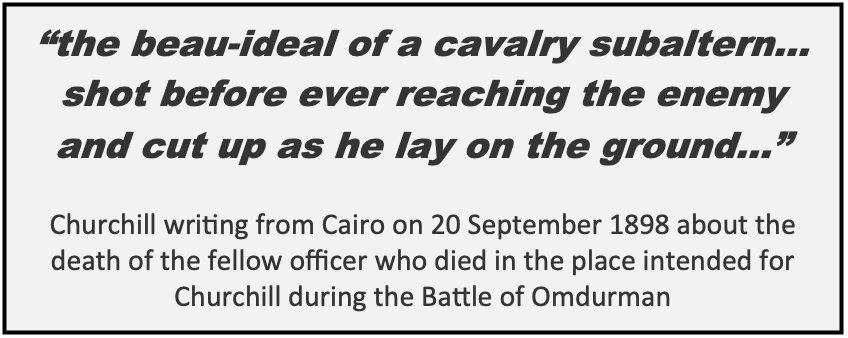
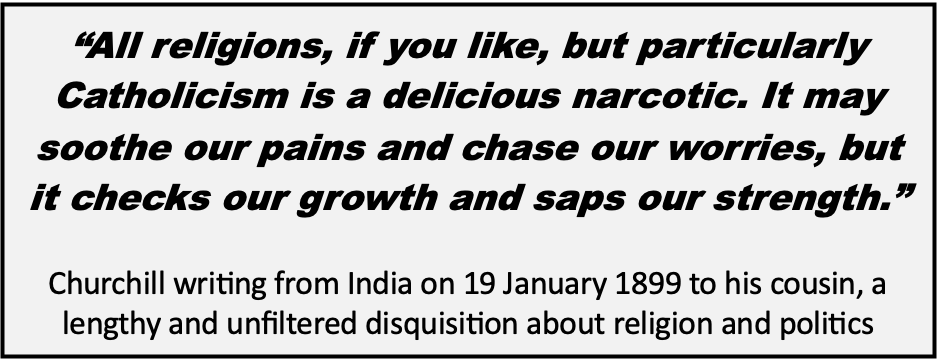
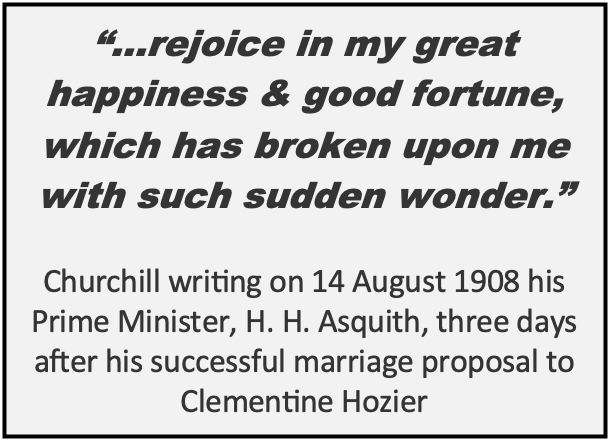
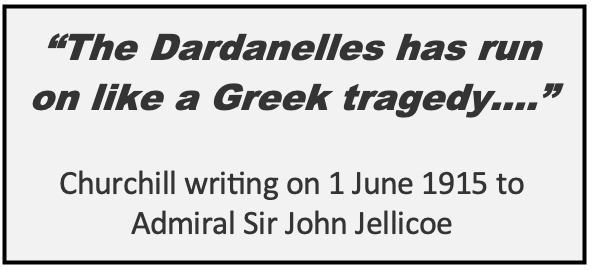
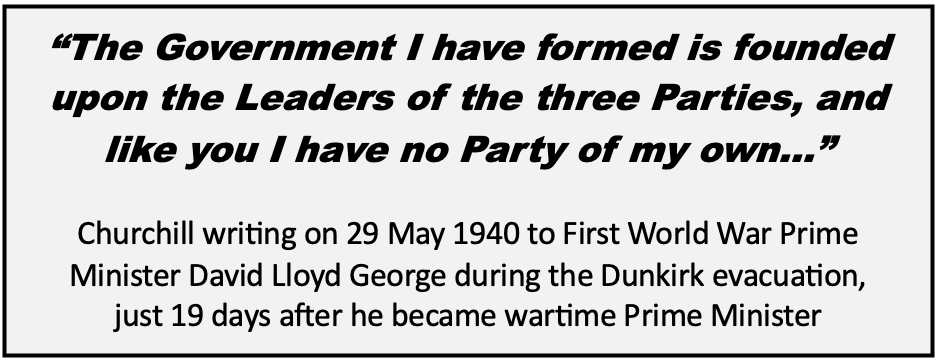
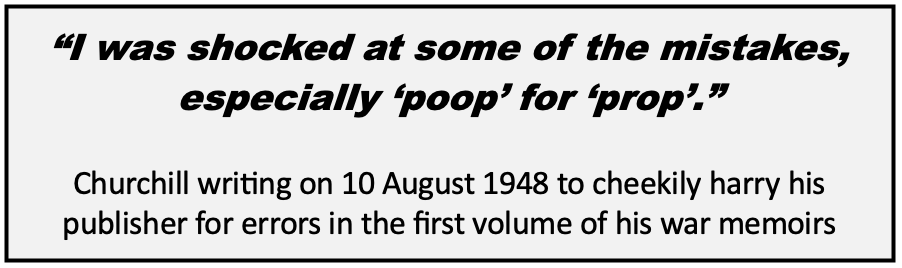
Churchill writes about his regard for his beloved nurse. He writes about the fellow officer who died in his place on the battlefield. He writes – startlingly candidly – about the nature of religion, the unfolding disaster of the Dardanelles, and the injustice of immigration restrictions. He writes letters of both deepest condolence and personal exhilaration. During the First World War, he writes to his brother regretting that he is not part of the fight, and then, not much later, reports as a soldier serving on the Western Front. He accepts the resignation of an iconic hero. He taunts his publisher. He picks a literary fight with a literary giant. He puts a former wartime prime minister in his place during his fraught first weeks as wartime prime minister. He exults in the liberation of France. He declines to see Joan of Arc burnt. He uses the weight of his office and personal prestige to defend the honor of a friend. He indulges in race horses during his final years.
This is our most ambitious catalogue to date. Each item therein merited research, context, and descriptive attention. Hence each item receives more of an essay or monograph than mere description, including images not only of the document(s) being offered, but also of contextualizing people, places, and events. The catalogue will first be available electronically to those on our contact list, and more broadly thereafter. Click HERE to join our contact list. Print copies will be available for purchase.
How scarce?
How scarce is such a catalogue? Well, we’ve never seen a dedicated catalogue of Churchill letters quite like this. The last time we saw such a large, curated, life-spanning tranche of significant Churchill letters released on the market was a decade and a half ago, during the auction liquidation of much of the legendary Churchill collection of the Forbes family. It is worth noting that a number of the most compelling letters from that liquidation – the ones that actually sold, not the ones the Forbes family is still trying to sell – will be found in our catalogue. There are also other treasures we have accumulated along the way – a mix of fortunate finds and material squirreled away in superlative collections that we’ve helped build over the years.
Why letters?
Perhaps no statesman left more of themselves on published paper than Winston S. Churchill. Today, we most often access and investigate Churchill’s life and legacy through the many published works he wrote and the many published works written about him. There’s no shortage of either. Not only is there a weighty, three-volume bibliography of published works by Churchill, but there’s also a bibliography of works published about him. And if that’s not enough, his official biography remains, unequivocally, the longest biography ever written.
What all this published work has in common is the limitations inherent to the very acts of drafting and editing, of expert input, careful consideration, and diligent preparation. Readying words for publication can dull and distance them even as they are polished. Deprive the immediacy of a moment or perspective. Leave the ink a little too dry on paper that’s just a bit too clean.
That’s why it may be that Churchill’s letters offer some of the clearest views of the man. Correspondence – by its nature more ephemeral, candid, and more distinctly in and of the moment than published works – can convey a vital sense of the correspondent. Letters, particularly the kind of letters you’ll find in this catalogue, can impart a vital sense of things that no acclaimed book or carefully crafted speech, however Churchillian in its mastery, can quite capture.
Moreover, letters speak to the complex compulsions that drive us to collect. For all the reasons stated above, letters address the curiosity and erudition that inspires and informs collectors. But collectors are not just amateur scholars; they are also trophy hunters. Letters offer the opportunity to have something truly singular – the sole copy of a unique encapsulation of moment and mind, ambered with ink and paper.
We look forward to celebrating Churchill’s birthday later this year by sharing this extraordinary trove of his correspondence with you.
Cheers!
